
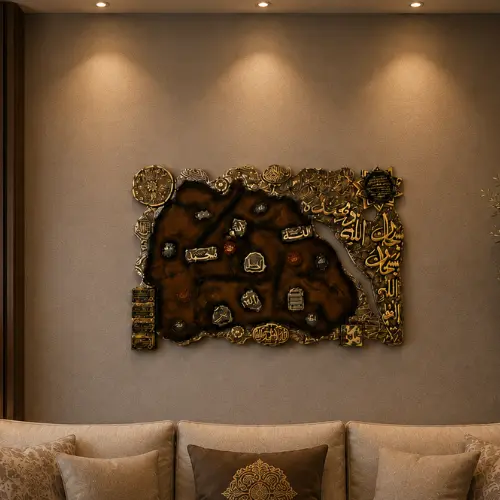
Luxury home decor ideas can transform an ordinary room into a welcoming, elegant space. The secret is not filling every corner with accessories; it is choosing a few thoughtful pieces, balancing textures, and using lighting to create atmosphere. With handcrafted wall art, decorative lamps, planters, fountains, and carefully selected accents, you can give your home a timeless look that reflects your personality.
1. Start with a Calm, Coordinated Colour Palette
A cohesive colour palette helps a room feel considered and premium. Begin with the colours already present in your flooring, furniture, and walls. Warm neutrals such as cream, beige, taupe, and brown create a relaxed foundation, while gold, bronze, or darker accents can add contrast.
You do not need every accessory to match exactly. Instead, repeat two or three tones throughout the room so the overall look feels connected. A decorative lamp, a framed artwork, and a planter can each have different finishes while still complementing one another.
2. Make a Statement with Decorative Wall Art
Walls offer an opportunity to express your style without taking up valuable floor space. Choose artwork that suits the scale of the wall and the furniture below it. A larger statement piece can anchor a living room, while a carefully arranged group of smaller pieces can bring character to a hallway or reading corner.
Islamic calligraphy wall art can add meaning as well as visual interest. Place it where it can be appreciated comfortably, and allow enough empty space around it so the design remains the focal point. Consider the wall colour, frame finish, nearby lighting, and the proportions of the furniture before deciding on placement.
3. Use Decorative Lamps to Create Warmth
Lighting affects how a room feels throughout the day. Rather than relying on one bright ceiling light, combine general lighting with decorative lamps and accent lights. Warm-toned lighting can make a lounge, bedroom, or corridor feel more inviting.
Choose a lamp that complements the room’s scale. A statement lamp can sit on a console or side table, while wall lights can highlight architectural details and help illuminate hallways. Keep cables tidy and ensure that each fitting is suitable for its intended location.
4. Style Planters and Pots with Intention
Decorative planters introduce natural texture and help connect indoor spaces with the outdoors. Choose a pot that complements the plant and the surrounding furniture. Tall planters can frame an entrance or a large window, while smaller pots work well on shelves, side tables, and balconies.
For a balanced arrangement, vary height and shape but keep the overall palette coordinated. Leave enough room for people to walk comfortably, especially near doorways and corridors. For outdoor use, check that the planter material and finish are appropriate for the local weather and intended placement.
5. Add a Fountain as a Focal Point
A decorative fountain can bring movement and a distinctive feature to a garden, patio, or entrance area. Before choosing one, measure the available space and consider access to a suitable power source if the fountain requires electricity. Position it where it can be seen without obstructing a pathway.
Keep the surrounding decor simple so the fountain remains the main feature. A few well-placed planters and appropriate lighting can complete the arrangement without making the area feel crowded. Follow the manufacturer’s instructions for cleaning, water levels, and safe installation.
6. Decorate the Entrance and Hallway
The entrance creates the first impression of your home. A well-proportioned console, decorative wall art, a statement lamp, or a pair of planters can make the area feel welcoming. In a narrow hallway, choose pieces that leave a clear walking route and avoid oversized accessories.
Use lighting to make darker corners more comfortable, and select finishes that relate to the rest of your interior. Repeating a material or colour from the living room can help the entrance feel like part of one considered design.
7. Mix Textures Instead of Overcrowding the Room
Premium interiors often combine contrasting textures: smooth surfaces, natural-looking stone, metal accents, glass, textiles, and greenery. This variety adds depth without requiring a large number of objects. Try grouping accessories in odd numbers and varying their heights, while leaving some surfaces clear.
Give special pieces room to stand out. If a wall artwork or decorative lamp is the focal point, keep nearby accessories quieter. Edit the arrangement from time to time; removing one or two items can make the remaining pieces look more intentional.
8. Choose Decor That Suits the Space
Before buying a decorative item, consider its dimensions, material, care requirements, and intended location. A piece designed for indoor use may not be suitable for an exposed outdoor area. Measure the space and check product details so the item fits both physically and stylistically.
Handcrafted home decor can bring individuality to a room because finishes and decorative details add character. Look for pieces that work with your existing furniture and that you will enjoy seeing every day, rather than choosing accessories only because they are currently fashionable.
9. Create a Simple Styling Plan
- Choose the room or area you want to improve.
- Select one focal point, such as wall art, a lamp, or a fountain.
- Pick two or three complementary colours or finishes.
- Add supporting pieces such as planters or smaller accessories.
- Check the balance, lighting, scale, and clear walking space.
- Keep the arrangement practical and easy to maintain.
Explore Handcrafted Decor at Decent Art Collection
Thoughtful accessories can help make a home feel personal, warm, and complete. Explore the range at Decent Art Collection and browse the shop for decorative pieces that suit your interior style. Compare dimensions, materials, finishes, and care instructions before choosing the right item for your space.
Frequently Asked Questions
What makes home decor look luxurious?
A coordinated colour palette, good lighting, suitable proportions, quality finishes, and a few well-chosen statement pieces can create an elegant look without overcrowding a room.
How can I decorate my living room on a simple budget?
Start by rearranging existing furniture, improving lighting, and choosing one or two impactful accessories. You can update a room gradually instead of replacing everything at once.
Which decorative items work well near an entrance?
Depending on the available space, consider wall art, a decorative lamp, a console accessory, or planters. Keep the walkway clear and select items that are proportionate to the entrance.
Can the same decor be used indoors and outdoors?
Not always. Check each product’s material, finish, weather resistance, electrical rating, and care instructions before placing it outdoors.
Make your home feel more considered with decor that balances beauty, comfort, and everyday practicality.